ANTOINETTE CHAMPCLOS
Life does not always follow the plan.
Hers taught her that changing course does not determine the destination.
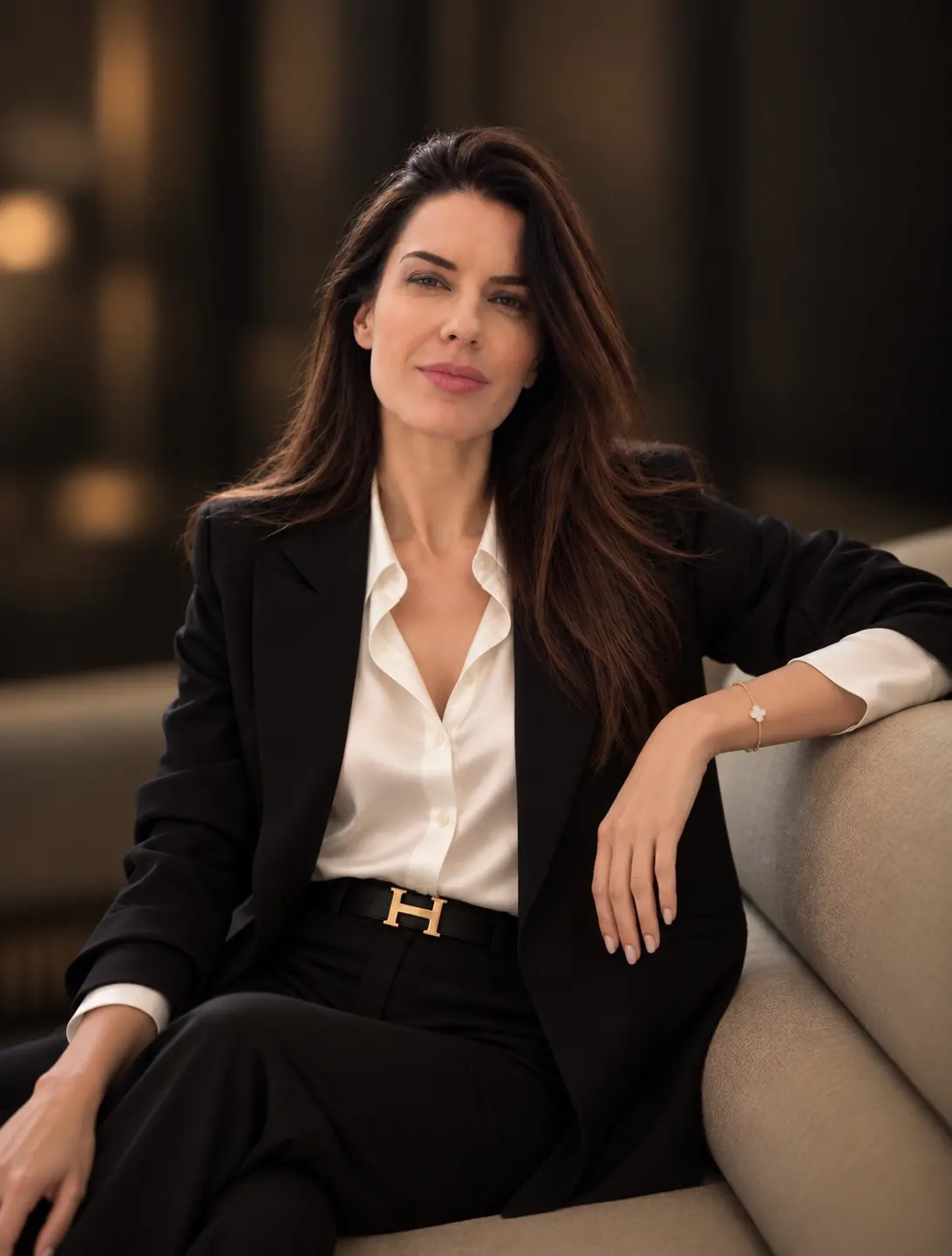
Born in Belarus and later becoming French, Antoinette Champclos studied law and finance before devoting more than fourteen years to aviation. She does not fit neatly into a single category.
She has lived in several countries, changed languages, professions and worlds — and more than once begun again where the course of a life had seemed already set.
At twenty-five, she entered French higher education before she had fully mastered the language. In her third year of law, she ranked third among some 600 students. She went on to earn a master’s degree in business law, followed by a second master’s degree in banking management and international finance. Her academic trajectory would later contribute to her being granted French nationality on the basis of academic merit.
But while that first life was taking shape, another had already begun.
Aviation.
THE SKY AS A SCHOOL
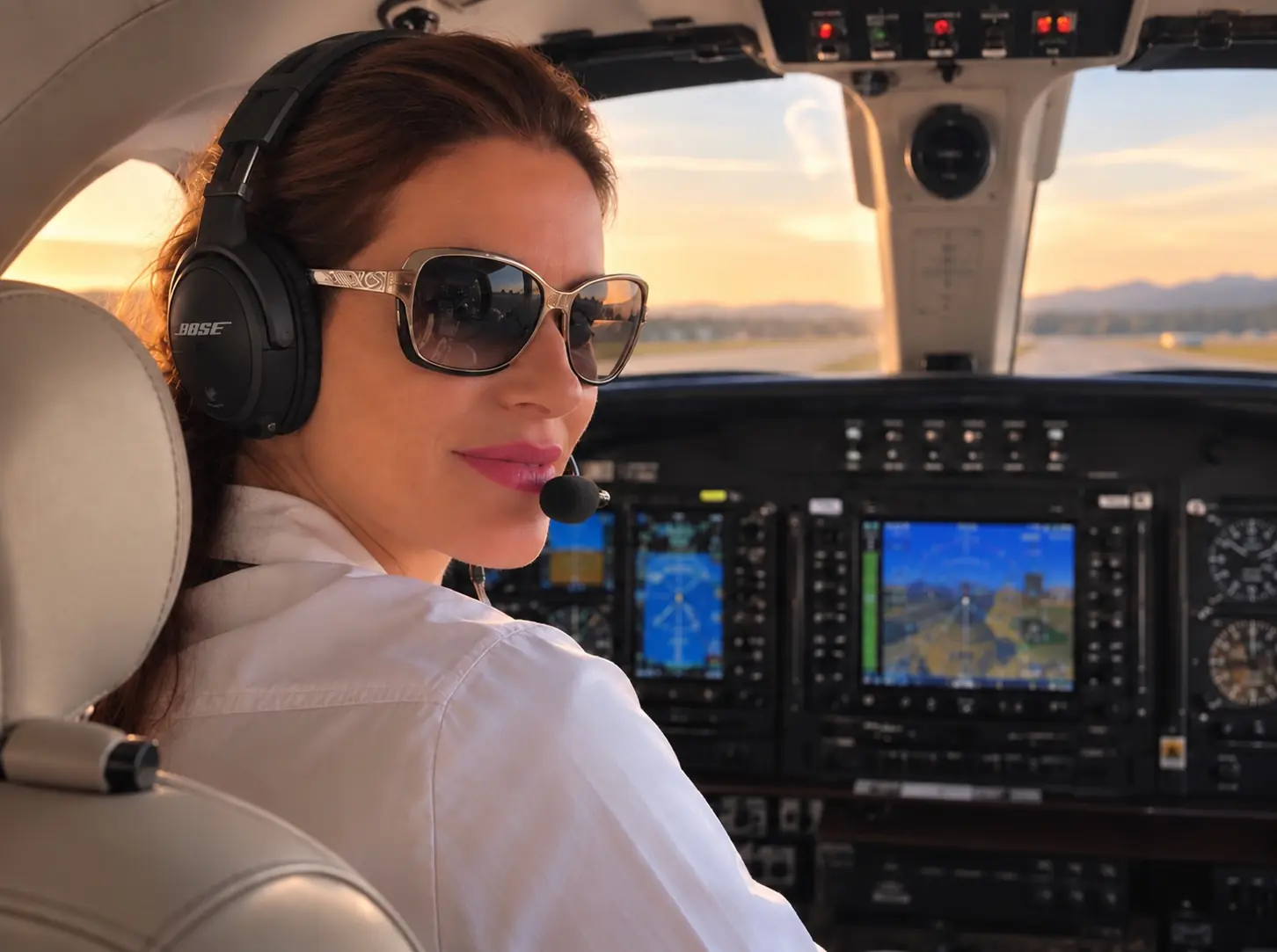
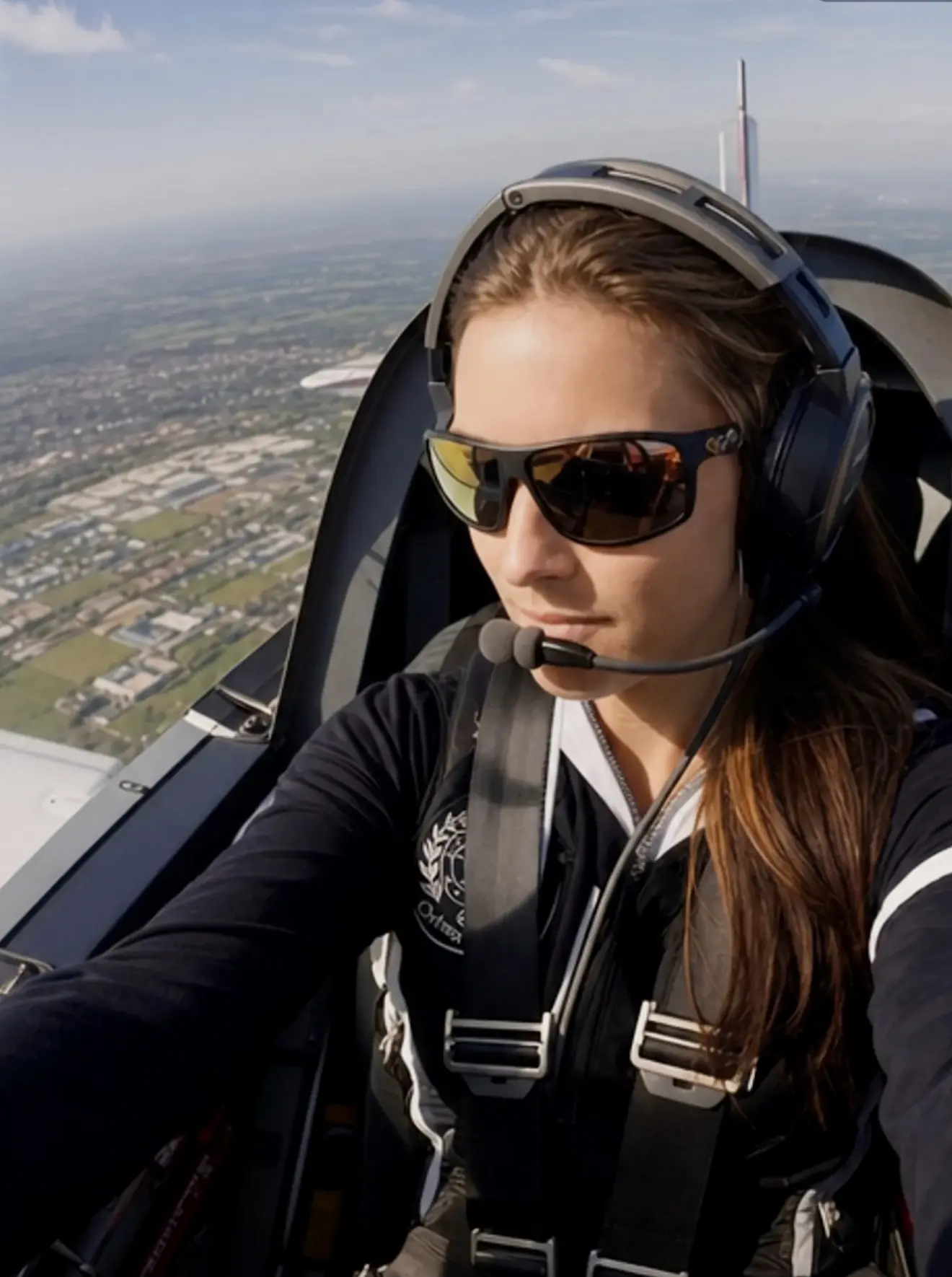
For more than fourteen years, aviation was central to her life.
She flew, trained and pursued a goal that had once seemed improbable: becoming a commercial pilot.
Aviation taught her a lesson she would carry far beyond the cockpit:
A plan is never a guarantee.
You must know your destination, monitor your resources, preserve a margin — and know what you will do if the first route is no longer available.
In a cockpit, an alternative is not pessimism.
It is what allows you to keep moving when circumstances change.
WHEN THE PLAN DISAPPEARS
In August 2020, Antoinette survived a devastating private-plane crash as a passenger.
In a matter of seconds, a trajectory built over years was overturned. Her body, her time, her projects, her certainties — everything that had seemed available the day before suddenly was not.
Severe injuries followed. Then came reconstruction.
A few years later, she returned to aviation and went on to do what the crash might have seemed to place beyond reach: she obtained her commercial pilot licence.
Her return to the cockpit came to embody something larger than aviation itself:
A route can disappear. The destination does not have to disappear with it.
WHAT REMAINS WHEN EVERYTHING CHANGES
The accident was neither the first nor the last disruption to the course of her life.
Over time, one question kept returning, until it became central to her thinking:
Why do some people retain several options while others see their ability to choose diminish?
The answer lies not only in the decision itself, but in what makes that decision possible: the resources we control, the dependencies we create, the time available to us, the alternatives we prepare and our ability to absorb a loss without allowing everything else to collapse.
In other words: In everything that exists before the choice.
FROM EXPERIENCE TO A WAY OF THINKING
Antoinette Champclos had begun turning experience into a way of thinking long before Maison Altitude.
Her first book, La Méthode infaillible pour réussir vos études (The Foolproof Method for Academic Success), published by Éditions de La Martinière and released in three editions, grew out of the same instinct: not simply to encourage people to succeed, but to understand what makes success possible in the first place.
What truly makes it possible to achieve a result?
Years later, it became broader:
What truly makes it possible to have a choice?
Law taught her to see the rules.
Finance taught her to assess resources and risk.
Aviation taught her to preserve margins, prepare alternatives and make decisions under constraint.
Life taught her what happens when the assumptions themselves disappear.
What we believe to be secure can vanish.
Not everything can be predicted. Not every loss can be prevented. But the architecture around a life can determine how much remains possible when circumstances change.
MAISON ALTITUDE
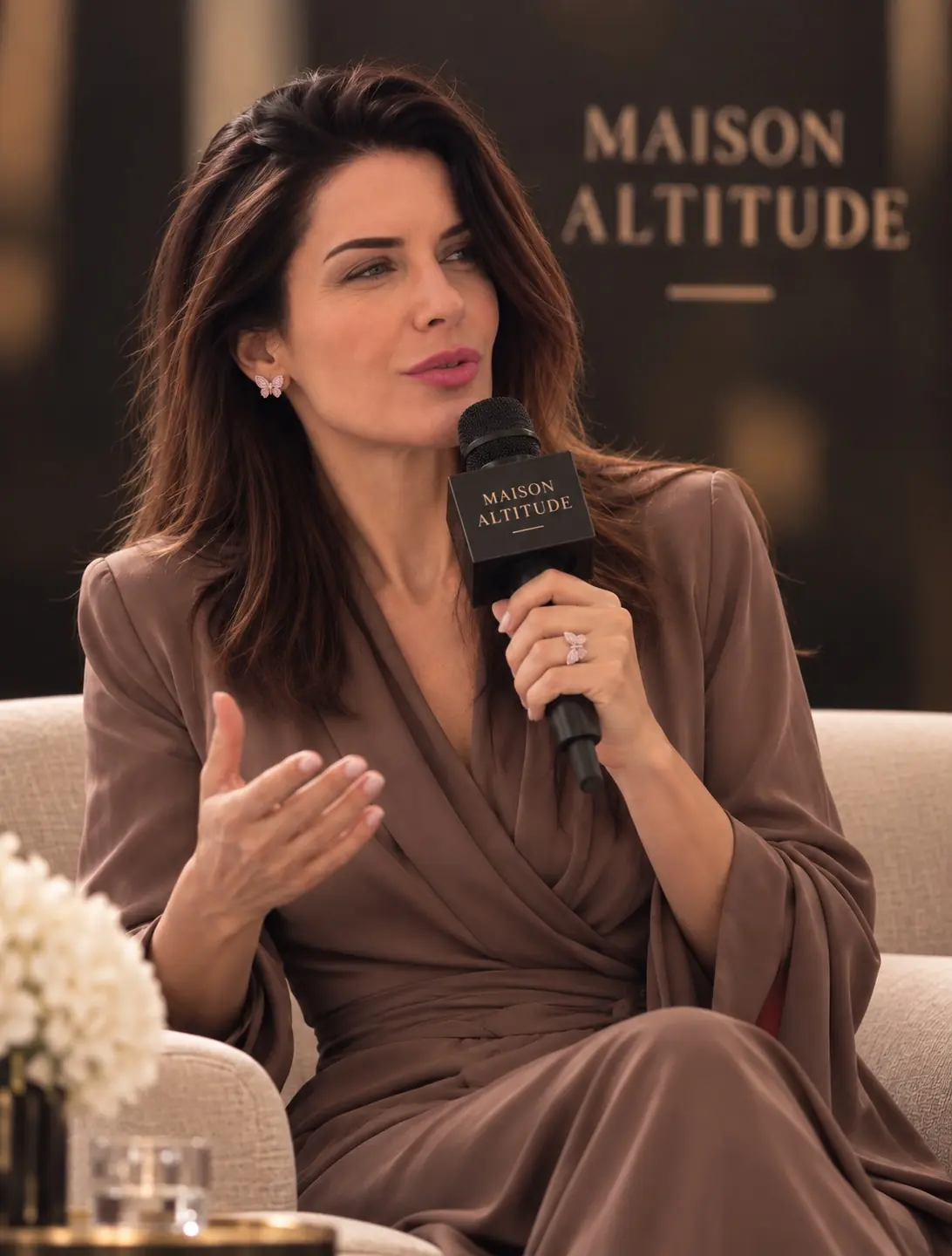
In 2026, Antoinette Champclos founded Maison Altitude, an independent house of strategy, publishing and intellectual property. It creates books, methods, content and experiences around one fundamental question: What makes a choice truly ours?
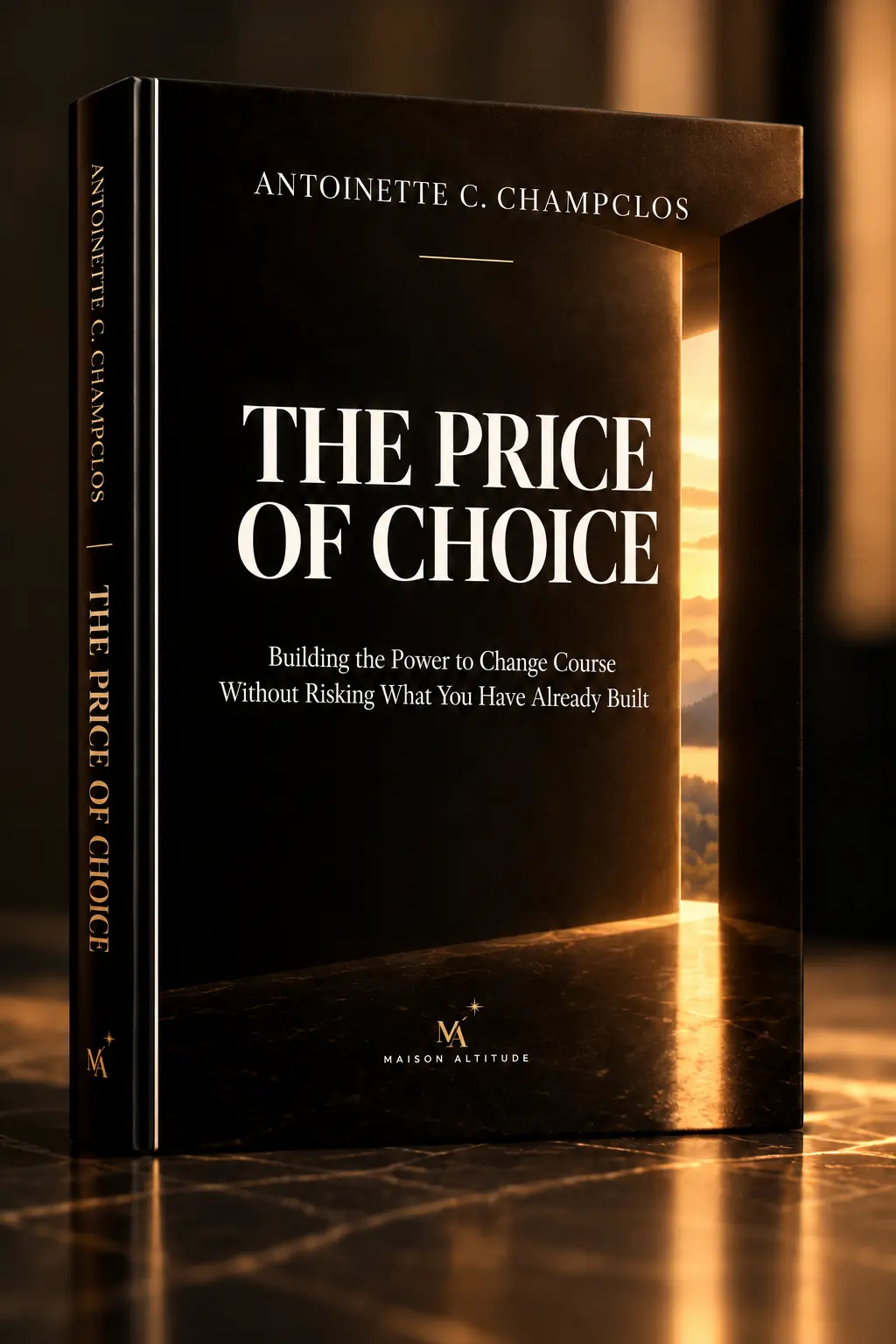
We spend a great deal of time asking ourselves what to choose. Far less time asking whether we have actually built the conditions that would allow us to choose it. Because between “I want” and “I can actually do it”, there can be a considerable distance.
Money can close it — or widen it. So can time. Skills. Alternatives. Dependencies. The ability to absorb a loss. The existence of another route. Maison Altitude is interested in that distance.
Not only in the choice itself, but in everything that determines whether that choice is genuinely available.
This is the thinking behind The Price of Choice — and the wider body of work now being developed through Maison Altitude.
“Between what you want and what you can actually choose, there is a gap.
Understanding what creates that gap is the first step towards reducing it.”— Antoinette Champclos